Appsters
AMBITION MEETS EXECUTION.Back to home ↗

Mobile Game Development

A Mobile Game Development Company That Builds Immersive Games.

Every mobile title competes for seconds of attention and gigabytes of patience. Appsters build experiences that survive both. Appsters delivers mobile game development services that keep frame rates steady, inputs crisp, and loops worth repeating.

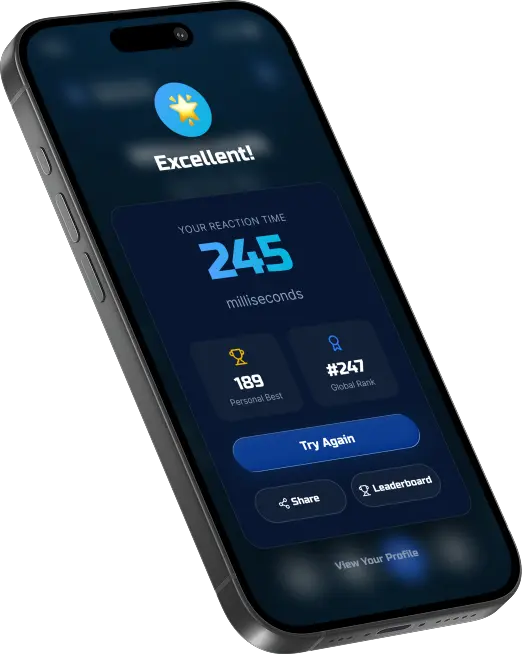
PRODUCT INTERFACE REFERENCEGlobal Reflex
Global Reflex — Reaction-game interface
Reaction-game interfaceExplore the product
Published Appsters portfolio imagery. Shown as an interface reference; no framework or delivery-role claim.

A clear starting point for Mobile Game Development.

Begin with the task and the people behind it. Explore a mobile game through its core loop, touch interactions, audience, and device constraints. The useful next step is to make the requirements, alternatives, and acceptance examples specific enough to discuss.

  • Casual concepts
  • Touch-driven play
  • Mobile game iterations

Built around
what matters.

These are useful starting points for a scope discussion, not a fixed package of deliverables.

01

2D Mobile Game Development

Our 2D mobile game developers ship titles that feel snappy on day one and day ninety. We keep draw calls low, animation timings tight, and UI readable on small screens. Asset pipelines produce crisp art at tiny sizes. Input latency stays low even on busy scenes. You get levels that load instantly, loops that reward mastery, and content drops that slot into the same clean build system.

02

3D Mobile Game Development

Great 3D mobile game apps respect GPU budgets. We plan worlds with LOD, occlusion, and streaming baked in. Shaders stay efficient, physics matches device limits, battery strain is monitored and fixed before submission. The result is a visual profile that looks premium on flagships and still holds 60 fps on mid-tier devices with crowds, particles, and UI stacked together.

03

Blockchain Game App Development

Our blockchain game app development service keeps play first and ownership verifiable. Wallet flows stay simple, contracts map to on-screen actions, and trades clear fast without freezing inputs. We stage testnets, run audits, and leave dashboards that track liquidity and failed calls. Your team sees where rewards land and how they affect retention, then tunes with proof.

04

AR/VR Game Development

Serious AR/VR game app development starts with comfort budgets. We pick interactions that remain stable across rooms, hands, and light conditions. Foveated rendering and smart culling keep frames steady. Onboarding teaches safely and fast, and asset sizes respect headset limits. Producers get scene checklists and test routes so content teams can add chapters without breaking comfort or tracking.

05

Web3 Game Development

Our web3 mobile games hide complexity and show value. Wallets connect without friction, items carry clear metadata, and governance lives behind sane menus. We log the signals that matter, not every click. Players feel progress, and operators see cohort movement, floor swings, and fraud patterns in the same view. Changes land in phases, not as risky jumps.

06

Metaverse Game Development

Real Metaverse game development means persistence that behaves. Avatars, spaces, and items share one identity layer across clients. Movement feels natural, and ownership stays legitimate. We build creator tools that respect moderation and royalties. Events run to capacity without dropping participants. Studio teams gain controls for queues, limits, and recovery, then scale worlds with confidence.

See the interface.
Explore the details.

Interface examples that show the service in context. Mockups use sample content; portfolio images are identified.

012D Mobile Game Development

2D Mobile Game Development

Our 2D mobile game developers ship titles that feel snappy on day one and day ninety. We keep draw calls low, animation timings tight, and UI readable on small screens. Asset pipelines produce crisp art at tiny sizes. Input latency stays low even on busy scenes. You get levels that load instantly, loops that reward mastery, and content drops that slot into the same clean build system.

DISCUSSION STARTERCasual concepts
Discuss this direction

A considered process.
At every step.

Scope, review points, and responsibilities are agreed around the actual engagement.

01

Discover & Define

Start with Mobile Game Development in the context of the intended users, the existing product or workflow, and the decision the project should support. Identify assumptions, constraints, and the material needed to agree on a useful first scope.

02

Shape & Demonstrate

Use the touch → play → feedback → replay sequence to examine the important states, handoffs, and exceptions. Review a focused prototype or technical example before committing to all implementation details.

03

Build & Validate

Implement the agreed scope and check representative journeys, integration boundaries, accessibility, and failure behavior. Review the work against the acceptance examples defined for this Mobile Game Development engagement.

04

Release & Evolve

Agree on release requirements, access, documentation, and operational responsibilities. Future maintenance and improvements are scoped around the actual product and the engagement terms.

Good decisions
need context.

Scope and implementation choices depend on your existing systems, access, users, and constraints.

Any external provider, license, hosting, or platform requirement is agreed for the project rather than assumed to be included.

Explore the published Appsters portfolio

A little more
clarity.

Start a conversation about the requirements that matter to your project.

01How do Appsters keep games stable across devices?

Appsters tests on real phones, not emulators. As a mobile game development company, we profile frame pacing, memory, thermals, and network jitter across device tiers.

02What sets your Game Application Development Services apart?

Appsters build around evidence, not assumptions. Our Game application development services pair quick prototypes with telemetry, then promote only features that prove fun and stable.

03How do you handle security in production builds?

As a Mobile game application development company, Appsters treats security as part of the design. We use keystores, receipt validation, obfuscation, and runtime checks. Payment SDKs stay verified; secrets rotate on schedule.

04Can we hire developers who understand live-ops?

Yes. When you hire mobile game developers from Appsters, you get engineers comfortable with live-ops, telemetry, and staged rollouts. We wire alerts to owners, run A/B tests, and automate content drops, so updates land and players keep progress and purchases intact.

05How do you scale backends for multiplayer?

As a game development company, Appsters designs backends for concurrency. We use scaling, queues, and caches to keep latency predictable. Matchmaking, leaderboards, and chat run on services, so spikes in one area do not crash another, and maintenance remains surgical.

06Why do studios choose Appsters for long-term success?

Studios pick Appsters for shipped results. Our mobile game development services combine fast prototyping, measurable goals, and steady live ops. You get budgets, builds, and a playbook for updates.

0 of 6 answered
01 About you
02 Your project
What are you hiring us for?

At least 20 characters. Please avoid confidential information.

We will review your note and follow up by email.

Tell us about
your idea.

Share a little context and send an inquiry to the Appsters team.